


What Is Retatrutide? Benefits, Research, Mechanism & Why Everyone Is Talking About It

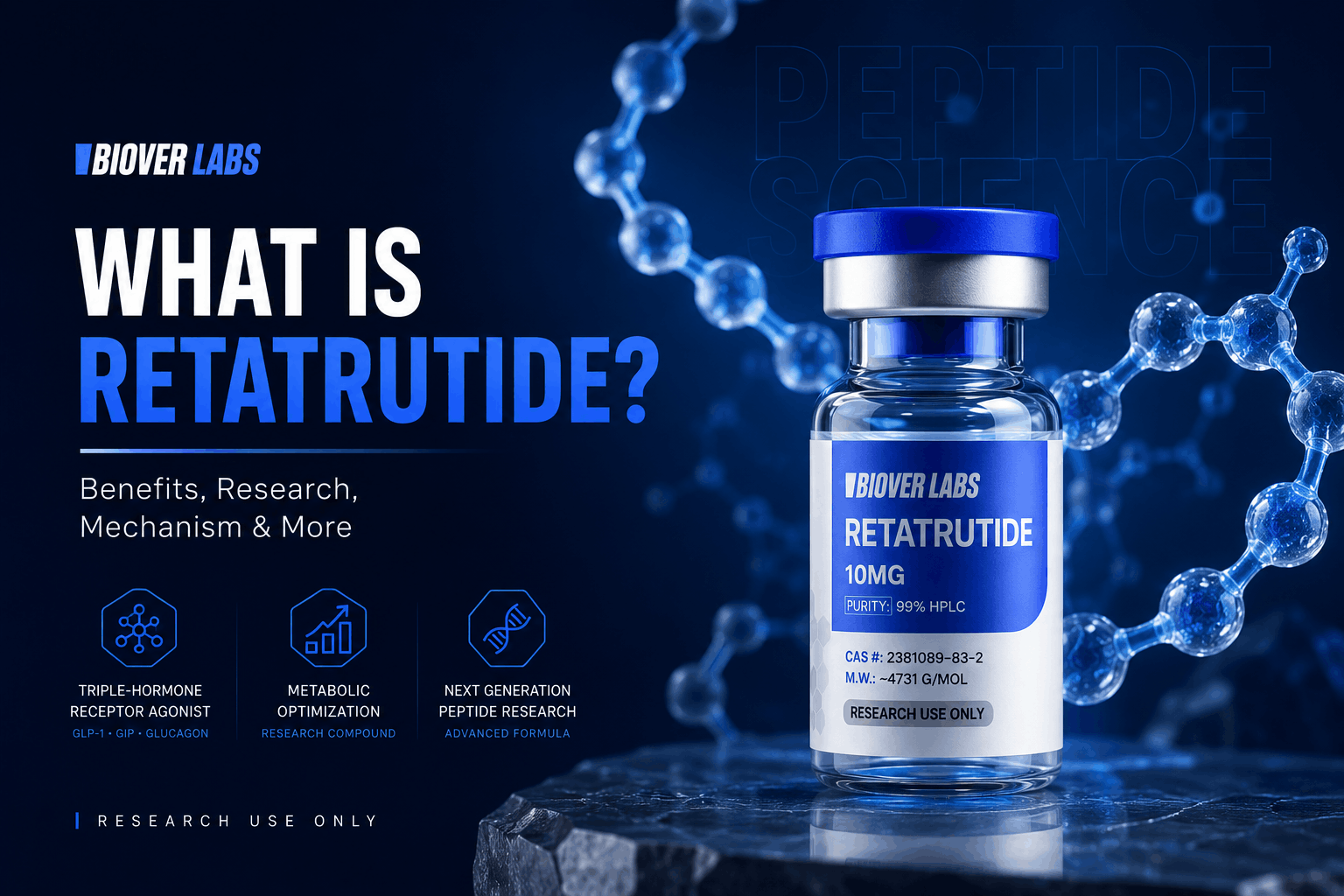
Over the past few years, peptide research has become one of the fastest-growing areas in the health, longevity, and metabolic optimization industry. Among the many compounds currently attracting attention, Retatrutide has quickly become one of the most discussed research peptides in the world.
Search interest surrounding terms like “What is Retatrutide?”, “Retatrutide benefits”, and “Retatrutide vs Semaglutide” has increased dramatically as researchers, biohacking communities, and metabolic health enthusiasts continue exploring next-generation peptide compounds.
But what exactly makes Retatrutide different from other metabolic peptides?
Why are so many people discussing it?
And why has it become one of the most searched peptide compounds online?
In this guide, we’ll break down:
- What Retatrutide is
- How Retatrutide works
- Why it’s gaining so much attention
- How it differs from traditional GLP-1 compounds
- Why researchers are closely following its development
- Why metabolic peptides are becoming increasingly important in longevity and optimization research
What Is Retatrutide?
Retatrutide is a research peptide currently being studied for its potential relationship with metabolic regulation, appetite signaling, glucose response pathways, and energy expenditure.
What makes Retatrutide unique compared to many earlier metabolic compounds is its multi-receptor activity. Unlike traditional single-pathway compounds, Retatrutide is associated with three different hormone receptor pathways that are connected to metabolism and appetite regulation.
These include:
- GLP-1 receptors
- GIP receptors
- Glucagon receptors
Because of this triple-pathway mechanism, many researchers consider Retatrutide part of a newer generation of metabolic research peptides.
The peptide has rapidly gained attention within:
- peptide research communities
- longevity-focused discussions
- metabolic optimization groups
- biohacking communities
- performance and recovery research circles
As interest in advanced metabolic compounds continues growing, Retatrutide has become one of the leading topics in peptide-related research conversations.
Why Is Retatrutide So Popular?
One of the biggest reasons Retatrutide has become so popular is the growing global focus on metabolic health.
Over the past decade, researchers and health-focused communities have increasingly explored:
- appetite regulation
- insulin signaling
- metabolic efficiency
- energy expenditure
- body composition optimization
- longevity science
As a result, compounds associated with these pathways naturally receive significant attention.
Retatrutide stands out because researchers believe its multi-receptor activity may create broader metabolic effects compared to older-generation compounds that only target one receptor system.
This has made Retatrutide one of the most talked-about compounds in modern peptide research.
Search trends show increasing demand for:
- Retatrutide benefits
- Retatrutide research
- best metabolic peptides
- next generation GLP-1 compounds
- peptide research for metabolism
- appetite regulation peptides
The rapid rise in online interest is one of the clearest indicators that Retatrutide is becoming a major topic within the peptide industry.
How Does Retatrutide Work?
To understand why Retatrutide is different, it’s important to understand the pathways associated with the peptide.
- GLP-1 Receptor Activity
GLP-1 pathways are commonly associated with:
- appetite signaling
- glucose response
- digestion-related signaling
- satiety mechanisms
This pathway has become widely recognized in metabolic research over recent years.
Researchers studying Retatrutide are interested in how GLP-1 related activity may interact with broader metabolic systems when combined with additional receptor pathways.
- GIP Receptor Activity
GIP is another hormone pathway connected to metabolic regulation and insulin-related signaling.
In peptide research discussions, GIP pathways are often explored in relation to:
- nutrient response
- metabolic balance
- energy utilization
- glucose-related signaling
The inclusion of GIP receptor activity is one reason why Retatrutide is considered more advanced than earlier single-pathway compounds.
- Glucagon Receptor Activity
The glucagon receptor pathway is associated with:
- energy expenditure
- metabolic activity
- fuel utilization
- body energy regulation
Researchers believe this additional pathway may be one of the key reasons Retatrutide has generated such strong interest within metabolic optimization research.
Why Multi-Receptor Activity Matters
Traditional metabolic compounds often focus on one primary receptor system.
Retatrutide is different because researchers are studying how multiple receptor pathways may work together simultaneously.
This multi-pathway approach is one reason why many experts view Retatrutide as part of the next generation of metabolic peptides.
The potential importance of multi-receptor research includes:
- broader metabolic interaction
- more advanced pathway targeting
- improved appetite-related signaling research
- energy balance studies
- metabolic efficiency exploration
Because of this, Retatrutide has become one of the most followed compounds in peptide research discussions.
Retatrutide and Metabolic Research
Metabolic research has become one of the fastest-growing sectors within the health and longevity industry.
Researchers are increasingly focused on understanding:
- how the body regulates appetite
- how metabolic pathways influence energy usage
- how hormone signaling affects body composition
- how metabolic efficiency impacts long-term health
Peptides associated with these pathways naturally attract significant attention.
Retatrutide has become especially important because researchers believe it may help expand understanding of how multiple metabolic pathways interact together.
This is one reason why Retatrutide is frequently discussed alongside:
- metabolic optimization
- longevity science
- biohacking research
- advanced peptide protocols
- next-generation metabolic compounds
Retatrutide vs Traditional GLP-1 Compounds
One of the most common search terms online is:
“Retatrutide vs Semaglutide”
Why?
Because researchers want to understand how newer compounds compare to earlier-generation peptides.
Traditional GLP-1 compounds generally focus primarily on one pathway.
Retatrutide differs because of its triple-receptor activity.
This broader receptor interaction is one of the key reasons researchers are paying close attention to it.
Potential areas researchers are exploring include:
- appetite-related signaling differences
- energy expenditure pathways
- metabolic flexibility
- broader metabolic interactions
- body composition research
Because of this, Retatrutide is often viewed as a more advanced research compound within peptide discussions.
Why Biohacking Communities Are Interested in Retatrutide
Biohacking communities are constantly searching for compounds connected to:
- metabolic efficiency
- performance optimization
- recovery
- longevity
- energy regulation
- advanced health optimization
Retatrutide fits naturally into these discussions because metabolism plays a major role in overall physiological function.
Within biohacking communities, metabolic optimization is often connected to:
- energy balance
- recovery efficiency
- long-term wellness
- hormonal balance
- body composition
- performance-focused research
As a result, Retatrutide has become increasingly popular within these circles.
The Growing Popularity of Peptide Research
Peptide research overall has grown dramatically over recent years.
Search demand for compounds like:
- BPC-157
- TB500
- GHK-CU
- Retatrutide
- Tirzepatide
continues increasing globally.
Why?
Because peptides are becoming one of the most discussed areas in:
- metabolic research
- longevity science
- recovery optimization
- performance research
- anti-aging discussions
Retatrutide has emerged as one of the leading names in this movement because of its unique receptor profile and growing visibility within scientific discussions.
Why Educational Peptide Content Matters
As interest in peptides grows, so does misinformation online.
Many websites publish low-quality or overly promotional content that lacks educational value.
That’s why high-quality peptide education is becoming increasingly important.
When researching compounds like Retatrutide, it’s important to focus on:
- scientific discussions
- research-focused information
- educational resources
- credible peptide communities
- structured research content
Understanding the mechanisms behind metabolic peptides helps create a more informed view of modern peptide research.
Retatrutide and the Future of Metabolic Optimization
The future of metabolic research is likely to focus heavily on:
- multi-pathway compounds
- metabolic flexibility
- hormone signaling research
- energy regulation
- appetite-related pathways
- advanced peptide compounds
Retatrutide is already becoming one of the central names within these discussions.
Its growing visibility suggests that interest in advanced metabolic peptides will likely continue expanding over the coming years.
Researchers, longevity communities, and peptide-focused audiences are expected to continue closely following developments related to compounds like Retatrutide.
Final Thoughts
Retatrutide has quickly become one of the most discussed compounds in peptide research because of its unique triple-receptor mechanism and growing popularity within metabolic optimization discussions.
Unlike traditional single-pathway compounds, Retatrutide is associated with multiple receptor systems connected to appetite signaling, metabolic activity, and energy regulation.
This broader pathway interaction is one reason why researchers are paying such close attention to the compound.
As peptide research continues evolving, compounds like Retatrutide are likely to remain central to conversations surrounding:
- metabolic optimization
- longevity science
- peptide research
- advanced biohacking
- next-generation metabolic compounds
The growing interest surrounding Retatrutide reflects a much larger shift happening across the health and longevity industry — a shift toward deeper exploration of metabolism, signaling pathways, and advanced peptide research.
For anyone following developments in modern peptide science, Retatrutide is undoubtedly one of the most important compounds to watch.
Available in our store

Bpc-157 10mg

Cjc-1295 Dac 10mg
$89.95
DSIP 10mg

Epithalon 10mg
$69.95
Ghk-cu 100mg


