


What Is TB-500? Why It Became One of the Most Discussed Recovery Peptides

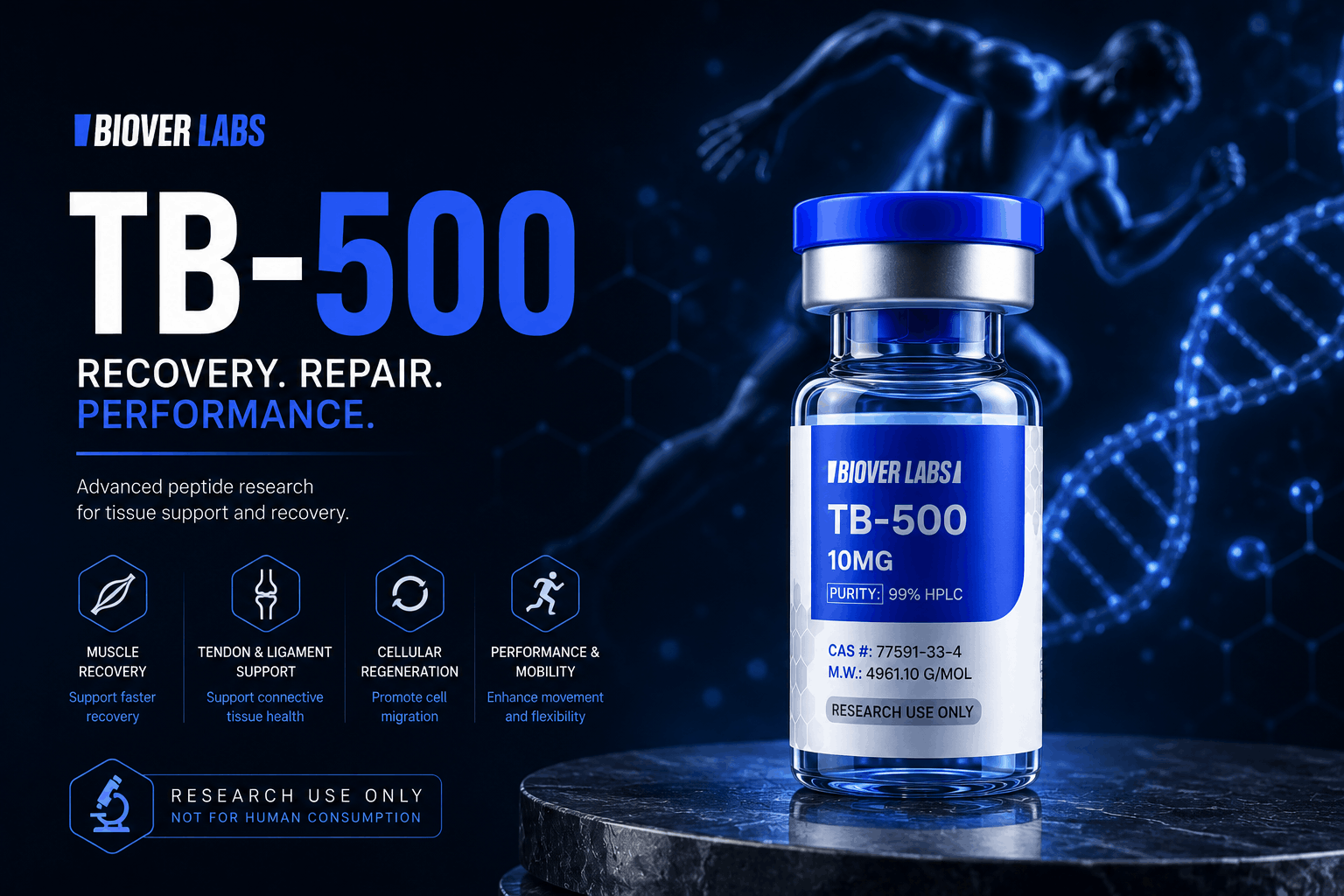
In recent years, TB-500 has become one of the most talked-about peptides in the world of recovery, performance optimization, and regenerative research. Interest around peptides has grown rapidly, especially among researchers focused on muscle recovery, connective tissue support, mobility, and overall recovery optimization.
Among all research peptides currently being discussed, TB-500 stands out because of its association with tissue regeneration, cellular migration, and recovery-related research models.
In this article, we’ll explore what TB-500 is, how it works, why it has gained so much attention, and why it continues to be one of the most searched peptides in the recovery research space.
What Is TB-500?
TB-500 is a synthetic peptide version related to Thymosin Beta-4, a naturally occurring protein found in the human body. Thymosin Beta-4 has been widely researched for its role in cellular repair, tissue regeneration, inflammation modulation, and recovery processes.
TB-500 was developed to allow researchers to study these mechanisms in a more stable and concentrated form.
Research surrounding TB-500 often focuses on:
- Recovery support
- Muscle repair mechanisms
- Tendon and ligament research
- Cellular regeneration
- Mobility and flexibility
- Tissue recovery pathways
- Inflammatory response modulation
Because of these associations, TB-500 quickly became one of the most recognized peptides in modern recovery-focused research communities.
How Does TB-500 Work?
One of the primary mechanisms discussed in TB-500 research involves actin regulation.
Actin is an important protein involved in:
- Cell structure
- Cellular movement
- Tissue organization
- Recovery signaling
Researchers believe TB-500 may support cellular migration processes, which are critical in recovery-related mechanisms.
Unlike some peptides that are studied for highly localized effects, TB-500 is often discussed in relation to systemic recovery support throughout the body.
This is one reason why it became particularly popular among recovery-focused researchers and performance optimization communities.
Why Has TB-500 Become So Popular?
The rapid growth of peptide research communities has dramatically increased awareness around compounds associated with recovery and optimization.
TB-500 gained attention for several reasons.
- Recovery Has Become a Major Focus
Modern performance research is no longer focused only on training harder.
Today, recovery optimization has become equally important.
Researchers increasingly explore ways to support:
- Faster recovery cycles
- Mobility maintenance
- Tissue support
- Reduced downtime after physical stress
TB-500 became widely discussed because it is frequently associated with these recovery-oriented pathways.
- Tendon and Connective Tissue Research
One of the most common topics surrounding TB-500 is tendon and connective tissue support research.
Connective tissues generally recover slower than muscles, which makes them a major area of interest in performance and recovery studies.
Research communities frequently discuss TB-500 in relation to areas such as:
- Shoulders
- Knees
- Elbows
- Achilles tendon
- Rotator cuff
- Ligaments
- Joint mobility
This contributed heavily to its popularity.
- Mobility and Movement Optimization
Another major reason behind TB-500’s growth is the increasing interest in mobility research.
Performance is not only about strength or muscle size anymore.
Movement quality, flexibility, and recovery efficiency are now major research topics.
TB-500 became associated with these conversations because researchers frequently discuss its potential role in tissue recovery pathways linked to mobility support.
TB-500 vs BPC-157
One of the most common discussions in peptide communities involves TB-500 and BPC-157.
These two peptides are often mentioned together because researchers associate them with different recovery-related mechanisms.
Generally:
- BPC-157 is discussed more in relation to localized recovery research
- TB-500 is discussed more in relation to systemic recovery pathways
Because of this, many research communities explore both compounds together in broader recovery models.
Topics frequently discussed include:
- Muscle recovery
- Tendon support
- Tissue regeneration
- Recovery optimization
- Mobility enhancement
This combination has become extremely popular within peptide research circles.
Why Researchers Continue Exploring TB-500
The growing interest in peptides is part of a much larger shift toward:
- Longevity research
- Wellness optimization
- Recovery science
- Human performance research
- Regenerative biology
TB-500 sits directly in the middle of these conversations.
As more people become interested in recovery-focused optimization, peptides associated with tissue support and recovery mechanisms continue gaining attention.
TB-500 remains one of the most recognized names in this category.
Common Areas of TB-500 Research
Although research continues evolving, several topics are consistently associated with TB-500.
Muscle Recovery Research
One major area involves recovery after intense physical stress.
Researchers frequently discuss how cellular recovery pathways may influence overall recovery efficiency.
Connective Tissue Support
Connective tissue research remains one of the most common TB-500 discussion topics.
Tendons and ligaments are exposed to constant stress during physical activity, making recovery research especially important.
Cellular Migration
TB-500 is often discussed in relation to cellular movement mechanisms.
Cellular migration is considered an important component of recovery and tissue organization research.
Recovery Optimization
As performance optimization becomes more mainstream, recovery-focused compounds continue attracting attention from researchers worldwide.
TB-500 remains one of the most recognized peptides in these discussions.
Why Product Quality Matters in Peptide Research
As peptide popularity increases, product quality becomes more important than ever.
Researchers typically look for several key factors:
- High purity standards
- Reliable sourcing
- Stable packaging
- Laboratory-grade production
- Consistency
- Research-focused quality control
Poor peptide stability can significantly impact research consistency.
Because of this, premium-grade peptide products are becoming increasingly important in the research community.
The Future of Recovery Peptides
The peptide industry continues evolving rapidly.
As recovery science, longevity research, and performance optimization become larger global trends, compounds like TB-500 will likely remain highly relevant.
Modern researchers are no longer focused solely on muscle growth or athletic performance.
The conversation has shifted toward:
- Recovery efficiency
- Tissue health
- Movement quality
- Optimization
- Long-term performance sustainability
TB-500 represents one of the most recognized peptides within this growing field.
Final Thoughts
TB-500 has become one of the most discussed peptides in modern recovery-focused research communities.
Its association with:
- Tissue recovery
- Cellular migration
- Recovery optimization
- Mobility support
- Connective tissue research
has made it one of the fastest-growing topics in the peptide space.
As interest in regenerative science and recovery optimization continues expanding, TB-500 will likely remain one of the most searched and researched peptides in the industry for years to come.
Available in our store

Bpc-157 10mg

Cjc-1295 Dac 10mg
$89.95
DSIP 10mg

Epithalon 10mg
$69.95
Ghk-cu 100mg


